
Get a special discount for new members!
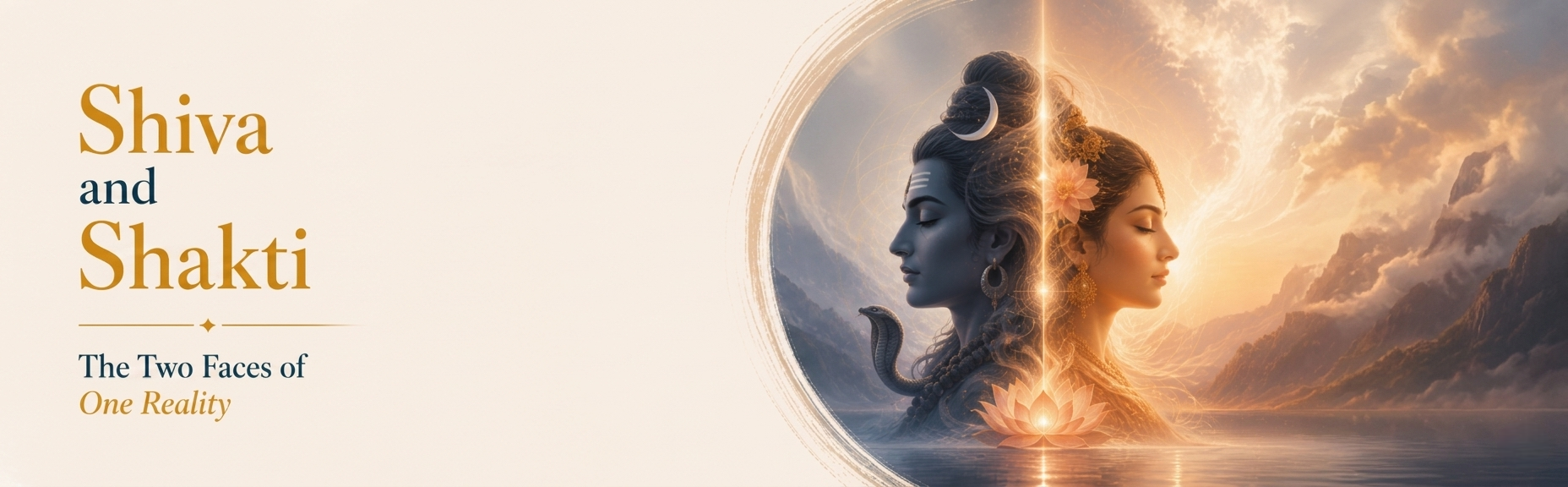
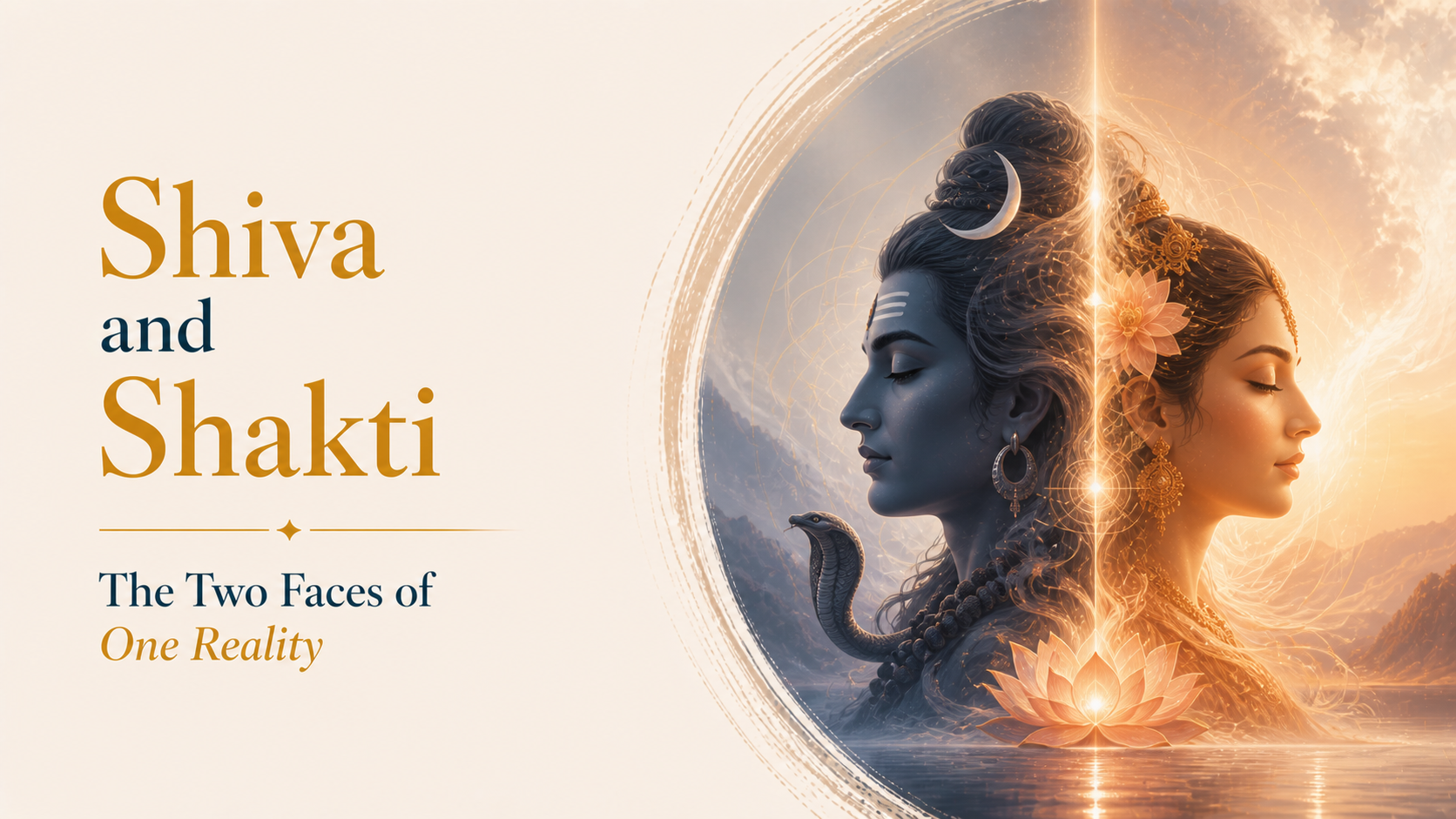
In Indian spirituality, few images are as powerful as Shiva and Shakti.
For many people, Shiva is the great yogi seated in stillness, and Shakti is the goddess, the divine feminine power, the movement of creation. This devotional understanding is beautiful, but in Trika Tantra, also known as Kashmir Shaivism, Shiva and Shakti point to something even deeper.
They are not only divine forms.
They are the two inseparable faces of one reality.
Shiva is the silent awareness in which all experience appears. Shakti is the energy by which that awareness knows, creates, expresses, conceals, reveals, and liberates.
Shiva is stillness. Shakti is movement.
Shiva is the luminous space. Shakti is the dance arising within that space.
But they are never separate. This is the most important point. If Shiva and Shakti are understood as two different realities, the heart of Tantra is missed.
In the Vijñāna Bhairava Tantra, Bhairava teaches:
“Just as there is always non-difference between power and the possessor of power, so the supreme Shakti is not separate from the Supreme Self “
This verse gives the essence of Shiva-Shakti understanding. Power cannot be separated from the one who possesses power. Heat cannot be separated from fire. Radiance cannot be separated from light. In the same way, Shakti cannot be separated from Shiva.
Shiva without Shakti would be consciousness without expression. Shakti without Shiva would be movement without awareness. But reality is not divided like that. Consciousness and its power are one.
This is why Trika Tantra does not reject the world. It does not say that the body is outside the sacred, or that energy is a distraction from spirituality. It says that the whole universe is the unfolding of Shakti within Shiva-consciousness.
Abhinavagupta’s Tantrāloka preserves a striking statement:
“This entire universe is his powers; the possessor of these powers is Maheśvara.”
This means that the world is not separate from the Divine. The universe is not an accident outside consciousness. It is the expression of conscious power. The mountains, rivers, stars, bodies, thoughts, senses, breath, mantra, devotion, longing, and awakening itself — all are movements of Shakti.
Yet Shakti does not become independent of Shiva. The Kashmir Shaiva view explains that the objective world appears through the expansion of Shiva’s Shakti, and this Shakti is absolutely one with him. The universe manifests within Shiva’s own nature, not as something outside him.
This teaching is not meant only for philosophy. It is meant to transform the way we experience our own life.
Right now, there is awareness by which you are reading these words. That awareness is Shiva.
At the same time, there is movement. The eyes are seeing. The mind is understanding. The breath is moving. Thoughts are forming. Meaning is arising. This movement is Shakti.
Normally, we separate the two. We imagine that silence is spiritual and movement is worldly. We think meditation is sacred, but daily life is ordinary. We think stillness belongs to Shiva and activity belongs to the world.
Trika Tantra gently corrects this.
Stillness and movement are not enemies. Awareness and energy are not separate. Meditation and life are not ultimately divided. The same consciousness that is present in silence is also present in action.
When you sit in meditation, awareness is Shiva and the breath moving within awareness is Shakti. When a mantra vibrates inside you, the silent knowing is Shiva and the sacred sound-current is Shakti. When emotion arises, the space that holds it is Shiva and the emotional movement itself is Shakti. When Kundalini awakens, the witnessing consciousness is Shiva and the rising inner current is Shakti.
The practice is not to reject Shakti in order to reach Shiva.
The practice is to recognize Shakti as the expression of Shiva.
This is a very healing teaching. Many seekers secretly fight with life. They fight the body, the mind, the senses, emotions, responsibilities, relationships, and the world. They imagine that spirituality means escaping all movement.
But Tantra says: do not escape too quickly. First, learn to see correctly.
The body is not merely flesh. It is a field of Shakti. The breath is not merely air. It is Shakti moving. The mind is not only a problem. It is Shakti in motion. Even longing for truth is Shakti calling the individual back to Shiva.
Of course, this does not mean every impulse should be followed. Tantra is not indulgence. It is recognition. There is a great difference between being lost in energy and recognizing energy as sacred.
When Shakti is unconscious, she appears as restlessness, craving, fear, anger, confusion, and bondage. When Shakti is recognized in awareness, the same energy becomes devotion, clarity, mantra, meditation, surrender, and liberation.
This is why Shiva and Shakti must be understood together.
If we only speak of Shiva, spirituality may become dry, detached, and world-denying. If we only speak of Shakti, spirituality may become scattered, emotional, and experience-seeking. But when Shiva and Shakti are known as one, the path becomes whole.
Awareness gives depth to energy.
Energy gives life to awareness.
Their union is not something that must be created. It is already the truth of every moment. The seeker only has to recognize it.
So, the next time you sit quietly, do not search for Shiva far away. Notice the awareness that is already present.
And do not reject Shakti. Feel the breath, the body, the vibration of life, the subtle movement of thought, the tenderness of the heart.
Then ask gently:
Is this movement truly separate from awareness?
Do not answer intellectually. Pause. Feel. Recognize.
This recognition is the doorway into Trika Tantra.
Shiva is not elsewhere. | Shakti is not outside you. | Their union is the living truth of your own experience
Explore authentic teachings on Trika Tantra, Kashmir Shaivism, meditation, mantra, Kundalini, and the path of recognition at Trika.in.