
Get a special discount for new members!
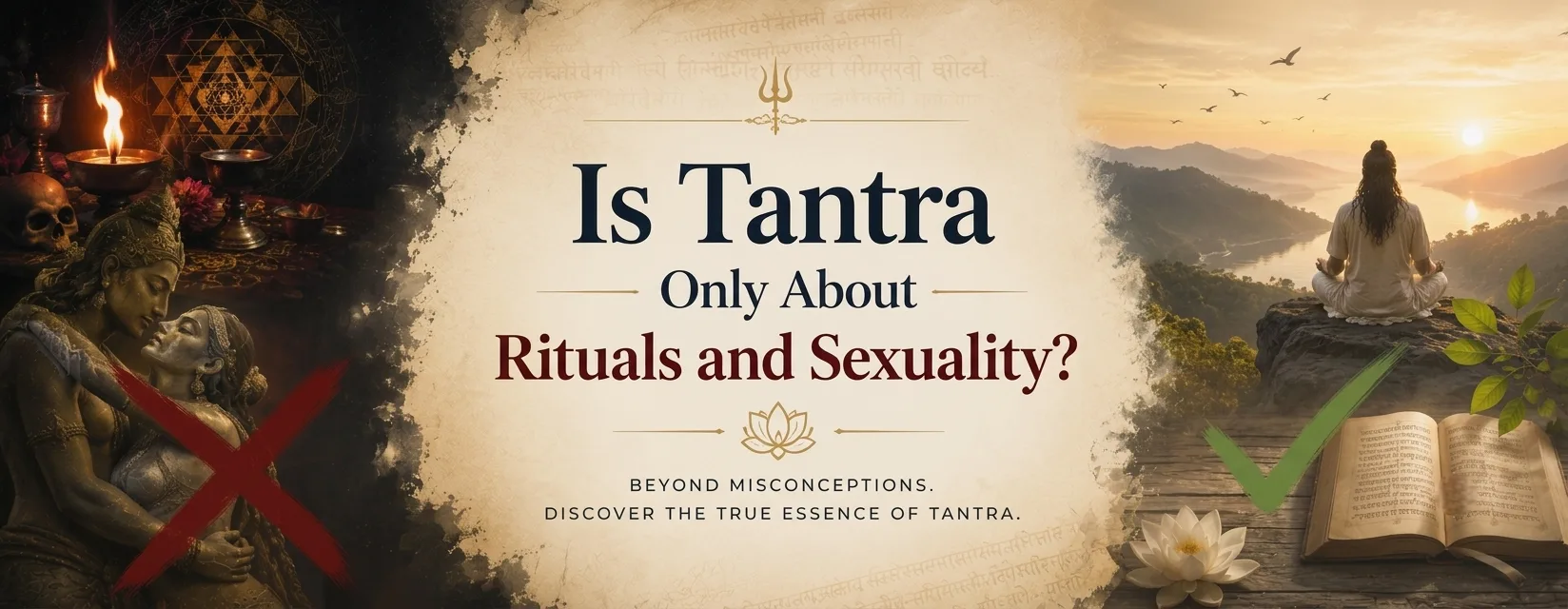
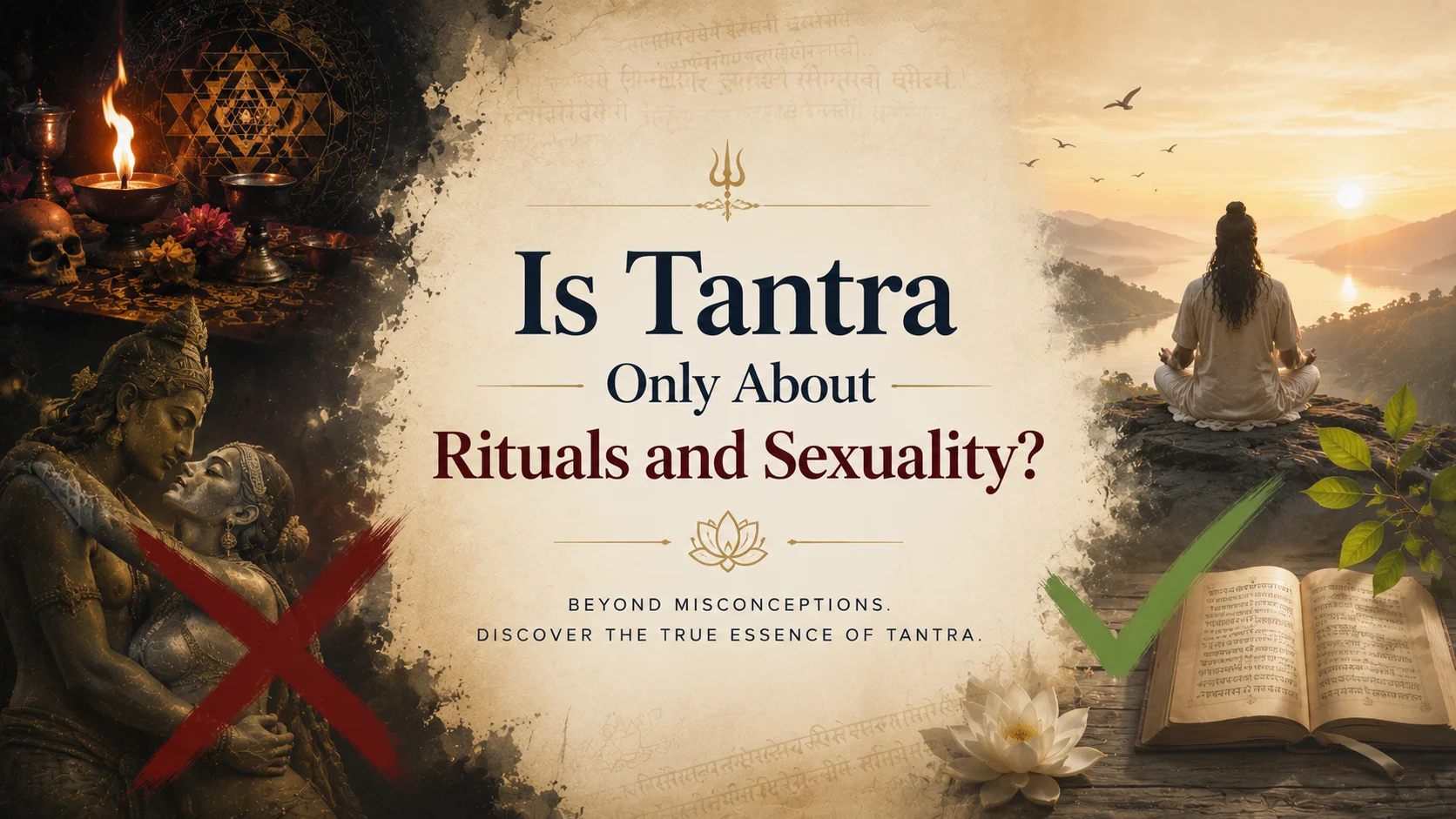
For many modern people, the word Tantra creates confusion.
Some imagine secret rituals. Some think of sexuality. Some associate it with strange practices, occult powers, or exotic ceremonies. Others dismiss it entirely because they have only seen Tantra presented through social media, workshops, fantasy, or distorted popular culture.
But authentic Tantra, especially in the Trika tradition of Kashmir Shaivism, is far deeper than this.
Tantra is not merely ritual.
Tantra is not merely sexuality.
Tantra is a complete spiritual vision in which body, breath, mind, mantra, senses, emotions, energy, relationship, and daily life can become doorways into awareness.
The real question is not, “Does Tantra include ritual?”
Yes, it can.
The real question is not, “Does Tantra speak about the body and energy?”
Yes, it does.
The deeper question is: What is Tantra truly trying to reveal?
In Trika Tantra, the answer is clear.
Tantra reveals that all of life is Shakti, and the essence of all experience is Shiva-consciousness.
Tantra became misunderstood because people often focus on its outer forms without understanding its inner aim.
Rituals, mantras, yantras, initiations, offerings, visualizations, deity practices, and energy practices are part of many Tantric traditions. But these are means, not the final goal.
In the same way, some Tantric streams speak about sexuality, desire, and the body. But this does not mean Tantra is simply a spiritualized form of pleasure-seeking.
When the outer form is separated from the inner understanding, Tantra becomes distorted.
A ritual without awareness becomes mechanical.
A mantra without absorption becomes sound only.
A body practice without sacredness becomes indulgence.
A sexualized interpretation without discipline becomes confusion.
This is why Tantra requires maturity, guidance, and proper understanding.
The Sanskrit word Tantra is often connected with the root tan, meaning to stretch, extend, or weave. Traditionally, Tantra is also understood as that which expands consciousness and liberates the practitioner.
This is a beautiful way to understand the path.
Tantra weaves together philosophy and practice.
It expands the seeker beyond narrow identity.
It liberates awareness from unconscious limitation.
It does not divide life into sacred and impure in a simplistic way. Instead, it asks us to discover the sacred essence hidden within life itself.
Everything can become a doorway when held in awareness.
Ritual has an important place in Tantra.
Lighting a lamp, offering flowers, chanting mantra, worshipping deity, using yantra, invoking Shakti, and performing pūjā can all be powerful. Ritual gives form to devotion. It trains the body, speech, and mind to align with the sacred.
But ritual is not the essence by itself.
The Vijñāna Bhairava Tantra says:
A simple rendering is:
This verse does not reject ritual. It reveals its deeper meaning.
Flowers may be offered outwardly, but the real offering is the mind returning to awareness.
A lamp may be lit outwardly, but the real lamp is consciousness.
Mantra may be spoken outwardly, but the real mantra is the awakening of Shakti within.
Ritual becomes Tantra only when it leads to inner recognition.
This is the most common misunderstanding.
Some Tantric traditions include teachings related to sexuality, energy, union, polarity, desire, and embodiment. But sexuality is not the whole of Tantra, and it is not the starting point for most seekers.
In Trika Tantra, the deeper principle is not pleasure.
The deeper principle is Shiva-Shakti nonduality.
Shiva represents pure consciousness. Shakti represents the dynamic power of consciousness. Their union is not merely a physical symbol. It points to the inseparability of awareness and energy, stillness and movement, silence and manifestation.
When this teaching is reduced only to sexuality, its philosophical and spiritual depth is lost.
Tantra does not say, “Follow every desire.”
Tantra says, “Recognize the Shakti moving inside desire, and return that movement to awareness.”
Tantra honors the body because the body is a field of Shakti.
Breath, sensation, posture, mantra, sound, emotion, and energy all move through the body. The body is where practice becomes real. The body is where fear is felt, desire is felt, devotion is felt, contraction is felt, and awakening is integrated.
But honoring the body is not the same as indulging every impulse.
A mature Tantric path requires discipline, respect, ethics, restraint, sensitivity, and awareness.
The body is sacred because it can reveal consciousness.
It is not sacred because the ego uses spirituality to justify pleasure.
This distinction is very important.
This is why Tantra is powerful for modern seekers. It does not ask everyone to run away from life. It asks us to awaken within life.
You can work, love, serve, create, speak, breathe, feel, struggle, and still practice.
The question is whether you remain unconscious, or whether you bring awareness into each experience.
Because Tantra includes powerful methods, it should not be approached casually.
Mantra, Kundalini, ritual, deity practice, Shaktipat, and deeper contemplations require guidance. Without proper understanding, seekers may become confused, inflated, imbalanced, or attached to experiences.
Tantra is not merely rituals.
Tantra is not merely sexuality.
Tantra is not fantasy, indulgence, or exotic performance.
In the Trika tradition, Tantra is a profound path of recognizing Shiva-consciousness through Shakti. It includes body, breath, mantra, mind, senses, ritual, devotion, energy, and daily life — but all are directed toward awakening.
Ritual becomes sacred when it leads inward.
Desire becomes transformative when held in awareness.
The body becomes a temple when seen as Shakti.
Mantra becomes alive when it gathers the mind into consciousness.
This is the real beauty of Tantra.
It does not reject life.
It reveals the sacredness hidden within life.
And when understood properly, Tantra becomes not a path of confusion, but a path of clarity, maturity, devotion, and recognition.
Explore beginner-friendly teachings on Shiva, Shakti, mantra, meditation, Kundalini, ritual, and awareness at Trika.in.